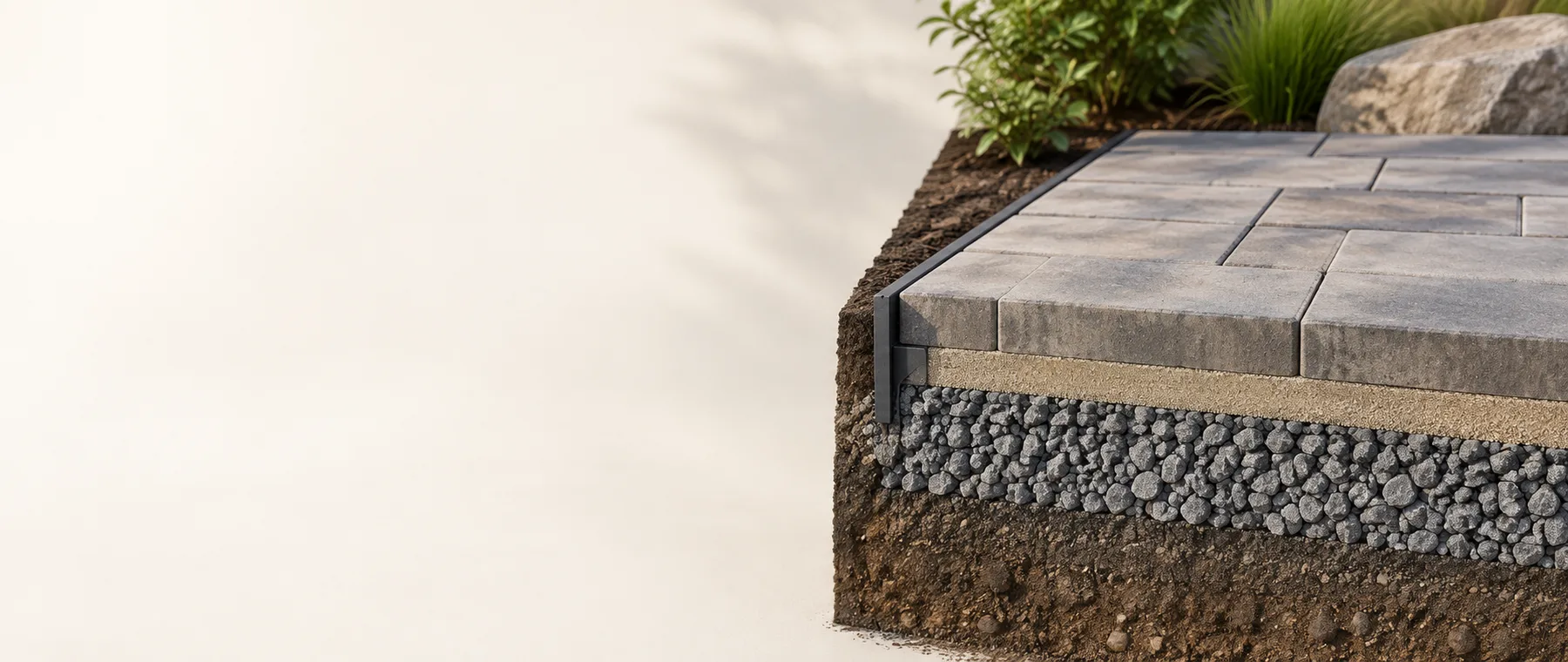
Paver Patio Materials: Base, Bedding Sand, Pavers, and Joints
A paver patio is a layered system, not one bulk-material calculation. The footprint may be shared, but each layer has a different depth, compaction rule, coverage value, and purchase unit.
Define the finished footprint and edge first
Measure the finished paved length and width, or split an irregular patio into simple sections. Record curves, cuts, borders, steps, drains, and fixed exclusions separately. The base may extend beyond the finished paver edge, so its measured footprint can be larger than the visible patio.
Do not use excavation depth as a substitute for every layer. Record the specified compacted base depth and finished bedding depth independently. Site conditions and project specifications determine those values; the calculator should not invent them.
Calculate compacted base and loose delivery separately
Base geometry produces a compacted installed volume. Bulk aggregate is delivered loose, so the order may require a project- or supplier-specific loose-to-compacted factor. A factor of 1.20 means ordering 20% more volume than the compacted geometric requirement; it is not the same thing as a laboratory density percentage.
Enter the extension beyond the paver edge where required, calculate the compacted volume, then apply the documented conversion. Confirm aggregate type, lift thickness, compaction equipment, drainage, and subgrade preparation from the approved installation plan.

Keep bedding sand out of the base calculation
Bedding sand is a separate, thinner layer with its own installed depth and material specification. Calculate area × bedding depth, then convert to bulk weight or bags using the selected product’s density or package yield. Reusing the base depth or compaction factor can substantially overstate the sand order.
General-purpose sand and bedding material are not automatically interchangeable. Product suitability and gradation remain installation decisions outside the quantity estimate.
Count pavers from actual dimensions or box coverage
For a single-size layout, divide net paved area by the installed module area, including the intended joint where appropriate. For mixed patterns or boxed products, the manufacturer’s square-foot coverage per bundle or pallet is often more reliable than counting one nominal unit.
Apply a cutting allowance based on the layout, borders, curves, and ability to reuse offcuts. Round to the supplier’s whole package, layer, or pallet unit only after the area allowance has been applied.
Estimate joint material from product coverage
Polymeric joint sand coverage varies with paver size, joint width, joint depth, and product. Use the current coverage range for the exact product and installation. When the manufacturer provides a range, the conservative lower coverage produces the larger bag count.
Joint material belongs at the end of the paver workflow. It should not be estimated from the bedding-sand volume, and it should not inherit the base or paver waste percentage automatically.
Field checklist
- Measure the finished patio and base extension.
- Record compacted base and bedding depths separately.
- Use a documented loose-to-compacted factor.
- Enter actual paver or package coverage.
- Add layout-specific cutting allowance once.
- Use product-specific joint-sand coverage.
- Confirm edge restraint, drainage, and installation details separately.
Questions people ask
Is paver base depth the same as excavation depth?
No. Excavation may also accommodate bedding, paver thickness, grade correction, or subgrade work. Enter the specified compacted base depth only.
Can I use one waste percentage for every layer?
Each layer has different losses and purchase rules. Apply only the allowance appropriate to that material and avoid carrying an already padded quantity into the next calculator.
Why does loose base volume exceed compacted volume?
Aggregate loses void space as it is compacted. Use the conversion specified for the material and project rather than treating a generic factor as universal.
How is polymeric sand coverage determined?
Coverage depends on the exact product, paver dimensions, joint width, and joint depth. Use the manufacturer’s current coverage range.
References
Product values and installation requirements can change. Use current project documents and the exact product label for the material you plan to buy.
- Unilock Advanced Technical Guide Distinguishes layers, compacted material properties, and installation variables.
- Belgard Technical Resource Guide Separates compacted aggregate base from bedding material and project details.
Calculators for this guide
Each tool keeps net geometry, allowances, and package rounding visible.