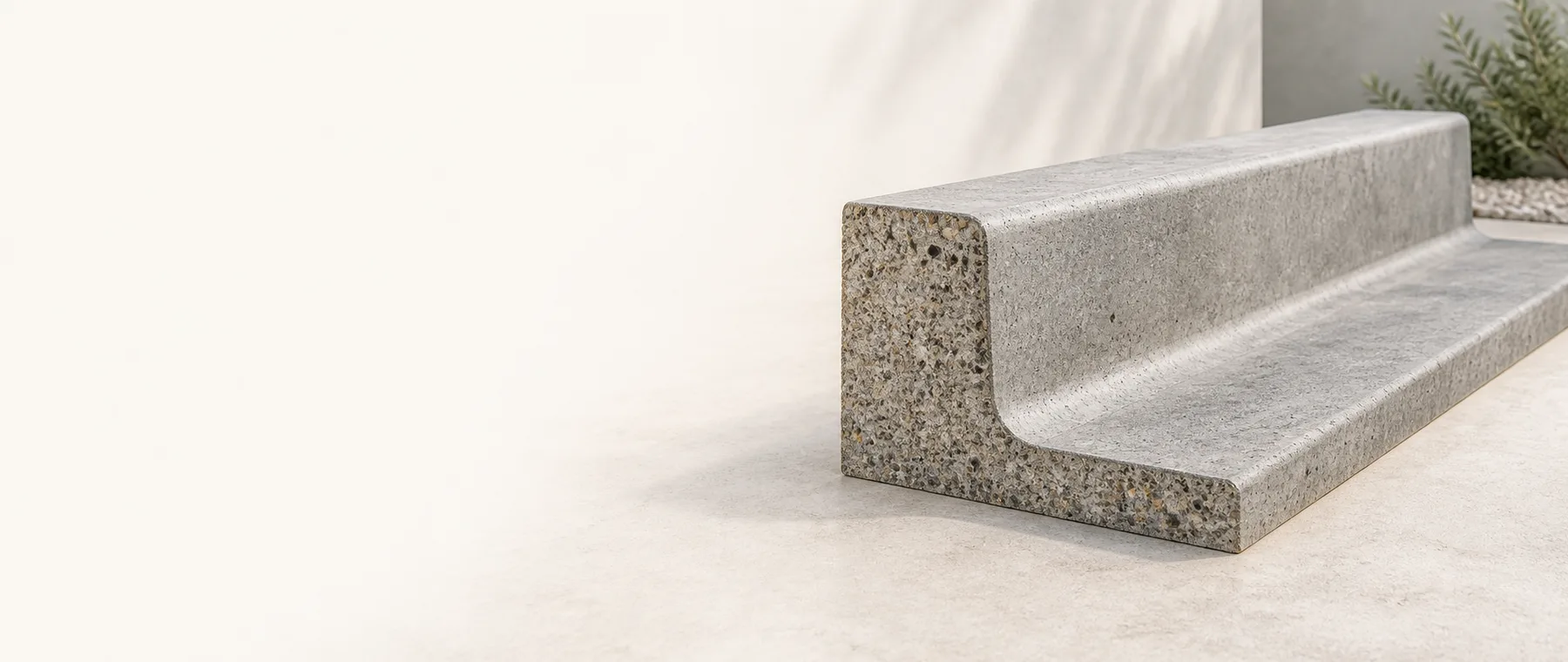
Concrete Curb Calculator
Estimate curb concrete from the profile area and run length, with curb and gutter kept visible.
- Cross-section area
- 72 in²
- Measured volume
- 50 ft³ (1.85 yd³)
- Order volume
- 55 ft³ (2.04 yd³)
This uses your rectangular curb or curb-and-gutter cross-section. It does not select a municipal profile, reinforcement, joints, drainage slope, or subbase.
Show calculation
(6 × 12) in² ÷ 144 × 100 ft × 1.1 ÷ 27 = 2.04 yd³Transparent method and editable product assumptions. Verify current labels and project requirements.
How this calculator works
The curb face is a rectangle in cross-section. Curb-and-gutter mode adds a second rectangular gutter section before multiplying the combined area by run length.
The measured volume and allowance-adjusted order volume are both shown so the added material remains auditable.
Real public-work profiles may include slopes, radii, depressed sections and specific reinforcement. Approximate those only with a verified equivalent area or a detailed takeoff.
Formula
Volume = (curb cross-section + optional gutter cross-section) × run × allowanceThe selected profile appears in the live calculation.Control example: 100 ft rectangular curb
A 6 × 12 in section has 72 in² of area, or 0.5 ft².
The raw volume is 50 ft³. With 10% allowance, order about 55 ft³ or 2.04 yd³.
Assumptions and limits
- Use the actual cross-section dimensions and run length from the project profile; confirm transitions and curved segments separately.
- Measurements describe one simple project geometry.
- Waste and package values are editable planning assumptions.
- It does not select a local curb standard, reinforcement, control joints, drainage slope, forms, subbase, or ADA geometry.
Common measuring mistakes
- Mixing nominal dimensions with actual installed coverage.
- Skipping whole-package or stock-length rounding.
- Failing to verify the page’s stated measurement and product assumptions.
- Using a planning estimate outside the limitations stated on this page.
Sources
Product-specific values remain editable. These sources support the method and stated examples; they are not a universal substitute for your supplier’s current label.
- GQ Calc methodology Documents cross-section-times-length geometry, unit conversion and final rounding.
- QUIKRETE Concrete Mix data sheet Provides package yield when the calculated curb volume will be converted to bags.
Questions people ask
What does the Concrete Curb Calculator calculate?
Calculate concrete curb volume for a rectangular curb or a user-defined curb-and-gutter cross-section and measured run.
How does this concrete curb calculator work?
Volume = (curb cross-section + optional gutter cross-section) × run × allowance
Which measurements should I enter?
Use the actual cross-section dimensions and run length from the project profile; confirm transitions and curved segments separately.
Does the estimate include every project requirement?
No. It does not select a local curb standard, reinforcement, control joints, drainage slope, forms, subbase, or ADA geometry.
Can I use metric measurements?
Yes. Switch to Metric above the form. The calculator converts the displayed measurements while keeping the same geometry and whole-item rounding.